Line of Credit Software Explained: A Complete Guide

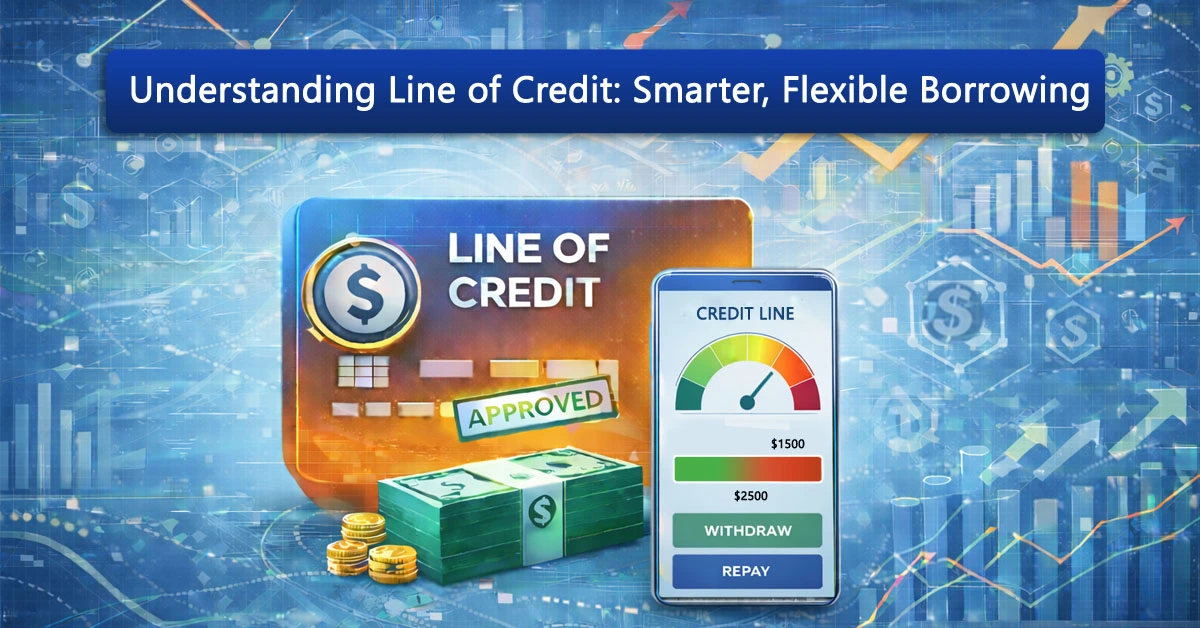
A Line of Credit (LOC) is a flexible loan that allows customers to borrow money up to a pre-approved limit and repay it as needed, similar to a credit card, but often with lower interest rates. Instead of receiving a lump sum (like a personal loan), you get access to a credit limit and can withdraw money whenever required.
Not every borrower needs a large loan all at once. More often, borrowers need access to funds when situations change; to cover short-term gaps, manage uneven cash flow, or handle unexpected expenses. This shift in how credit is used is driving the rapid growth of Line of Credit (LOC) lending across modern lending portfolios.
Instead of providing a single disbursement that is repaid over a fixed schedule, the LOC lending model allows customers to access credit multiple times within an approved limit. This structure gives borrowers ongoing access to funds while allowing lenders to build longer-term customer relationships and increase lifetime value through repeat usage.
However, delivering these products operationally is more complex than traditional term lending. Credit exposure changes continuously, balances fluctuate with every transaction, and systems must maintain accurate visibility across borrower channels, servicing teams, and reporting environments.
SparkLMS is designed to support this shift by enabling lenders to launch and scale LOC without relying on workaround-based configurations. The platform supports dynamic balances, multiple drawdowns, and flexible repayment behavior within a single, continuously managed credit account.
Also Read: Soft Pull vs Hard Pull and When Lenders Should Use Each
A LOC changes how borrowing is structured. Instead of receiving one fixed loan amount and repaying it over time, borrowers are approved for a maximum credit limit they can access whenever funds are needed.
Here’s what that looks like in practice:
This shift turns credit into an ongoing financial tool rather than a one-time transaction.
Another key difference is how interest works. In most LOC lending, interest is charged only on the amount currently used, not the full approved limit. This aligns pricing more closely with actual usage, but it also means credit exposure can change constantly.
Every draw, repayment, or fee directly affects balances and available credit. To maintain accuracy, lending systems must keep credit data updated across servicing platforms, reporting tools, and borrower-facing channels at all times.
Behind every successful Line of Credit product is a system that can keep up with constant change. Unlike traditional loans, where balances decline on a fixed schedule, revolving credit changes with every borrower action.
In a LOC account, every borrower action directly changes the state of credit.
If these updates don’t happen instantly and consistently, lenders risk incorrect balances, over-utilization, and mismatched data across borrower and internal systems.
SparkLMS is built to manage this dynamic behavior by modeling a LOC as a long-lived credit account, not a series of disconnected loans. Each drawdown is recorded as its own transaction, with its own timestamp, amount, and interest start point, while remaining part of a single credit relationship.
As borrowers draw, repay, or incur charges, SparkLMS loan management platform recalculates balances and credit availability in real time. This ensures borrower portals, servicing teams, and reporting environments always reflect the same, accurate credit state.
This becomes especially important in high-volume digital lending, where borrowers expect immediate updates and lenders need continuous visibility into portfolio exposure. By maintaining a single, real-time view of credit activity, SparkLMS helps prevent over-utilization, reduces reconciliation effort, and supports scalable revolving credit operations.
In a LOC portfolio, risk exposure shifts continuously as borrowers draw funds, make repayments, or incur charges. The relationship between approved credit, used balance, and available credit must remain accurate at all times to support both portfolio stability and borrower experience.
At any point, lenders must clearly understand three core metrics:
Even small inconsistencies between these values can lead to:
Utilization is a key indicator of credit behavior and portfolio health. Changes in utilization often reflect shifts in borrower repayment capacity or credit dependency.
SparkLMS enables lenders to manage exposure through built-in credit controls that operate directly within the credit lifecycle.
Before every drawdown, SparkLMS performs exposure validation checks to ensure transactions remain within approved credit limits.
By combining utilization insight, adaptive limit management, and automated exposure validation, SparkLMS helps lenders maintain healthier revolving credit portfolios while continuing to support flexible borrower access.
Pricing in Line of Credit products is more dynamic than in traditional lending models. Because balances can change at any time, interest and fee calculations must adapt to continuously changing credit usage while remaining accurate and transparent for both lenders and borrowers.
In most Line of Credit lending models, interest is charged only on the amount currently used, not the full approved credit limit. This approach aligns pricing more closely with actual borrower usage, but it also requires systems to calculate interest accurately even when balances change multiple times within a billing cycle.
SparkLMS supports flexible interest configuration to match different lending models and regulatory environments.
In addition to interest, many Line of Credit programs include configurable fee structures that support product design and risk management strategies.
SparkLMS enables lenders to configure fees at the product level and apply them automatically based on predefined rules.
Accurate pricing calculations are critical not only for revenue but also for regulatory transparency. SparkLMS maintains detailed transaction histories and calculation records, helping lenders respond quickly to audits, disputes, and regulatory reviews.
By combining flexible pricing configuration, automated fee application, and detailed audit visibility, SparkLMS helps lenders deliver transparent and compliant revolving credit products at scale.
Managing a Line of Credit portfolio doesn’t end at origination or servicing. Because these accounts remain active over long periods, collections and risk management strategies must focus on account recovery, borrower retention, and long-term portfolio stability rather than immediate account closure.
In revolving credit, delinquency is typically tied to minimum payment obligations rather than total outstanding balance. This allows lenders to intervene early while keeping credit relationships active and recoverable.
SparkLMS supports this loan lifecycle approach by enabling lenders to apply automated intervention workflows directly within the credit account.
Beyond individual account management, portfolio-level intelligence plays a critical role in managing revolving credit risk and growth.
As digital lending continues to evolve, LOC lending is becoming more adaptive and personalized. Lenders are increasingly using real-time data, cash-flow insights, and behavioral analytics to shape credit limits, pricing, and borrower engagement strategies.
SparkLMS provides the infrastructure needed to support this shift toward dynamic, data-driven revolving credit models. By combining servicing automation, portfolio intelligence, and configurable credit controls, the platform helps lenders adapt to changing borrower behavior while maintaining operational accuracy and regulatory confidence.
As Line of Credit lending continues to grow across digital and embedded finance ecosystems, technology foundations will play a defining role in how efficiently lenders scale, manage risk, and deliver consistent borrower experiences.
As Line of Credit lending evolves, lenders that succeed will combine flexible credit experiences with strong operational foundations and real-time visibility.
A line of credit is a flexible form of borrowing that lets customers draw funds up to a pre-approved limit and repay as needed. Instead of receiving a lump sum, borrowers access credit whenever required and reuse it as they repay.
Both provide revolving access to funds up to an approved limit, with interest charged on the amount used. A line of credit typically allows direct cash drawdowns and can carry lower interest rates than a credit card, depending on the product.
SparkLMS records each drawdown as its own transaction with a timestamp, amount, and interest start point. Every drawdown remains part of a single, continuously managed credit account.
Utilization reflects borrower repayment capacity and credit dependency. Rising or shifting utilization can signal early repayment stress, growing reliance on revolving credit, or opportunities for safe credit line expansion.
Yes. SparkLMS lets lenders automate credit limit increases or reductions and apply credit policies through configurable rules. No engineering changes are required to update policy logic.
Interest on revolving credit must account for balances that change throughout the billing period, multiple drawdowns within the same cycle, partial repayments at different times, and continuous accrual on active balances.